Game-Based Learning and Simulation
Apprentices don’t study the risk cycle. They run it.
Two scenarios, about 45 to 60 minutes each, now rolling out to project management apprentices.

Dr Onyekachi Onuoha
Dr Onyekachi Onuoha teaches project management at the University of Exeter. With funding from the University’s Education Incubator, he set out to gamify risk management for degree apprentices, giving them a safe place to practise the calls they make at work. We turned his written framework into a simulation where apprentices act as the Risk Manager on a major project, make every call themselves, and live with the consequences. Below, the work is told through the five stages of Play to Outcome.
01 / Decode:
The outcome
Risk management is usually taught as a sequence on a slide: identify, analyse, respond, monitor. Apprentices can recite it and still miss the risk in front of them, because nothing in a lecture makes them choose under pressure.
With Dr Onuoha, we defined the outcome:
- 01
Apprentices who can run the full risk cycle on a realistic project.
- 02
An assessment that marks every decision without a facilitator scoring each answer by hand.
02 / Design:
The experience
Eight stages take apprentices through the whole cycle: identification, analysis, response, stakeholder pressure, monitoring, issue management, opportunities and lessons learned. Every stage feeds the next, so early mistakes come back.
- 01
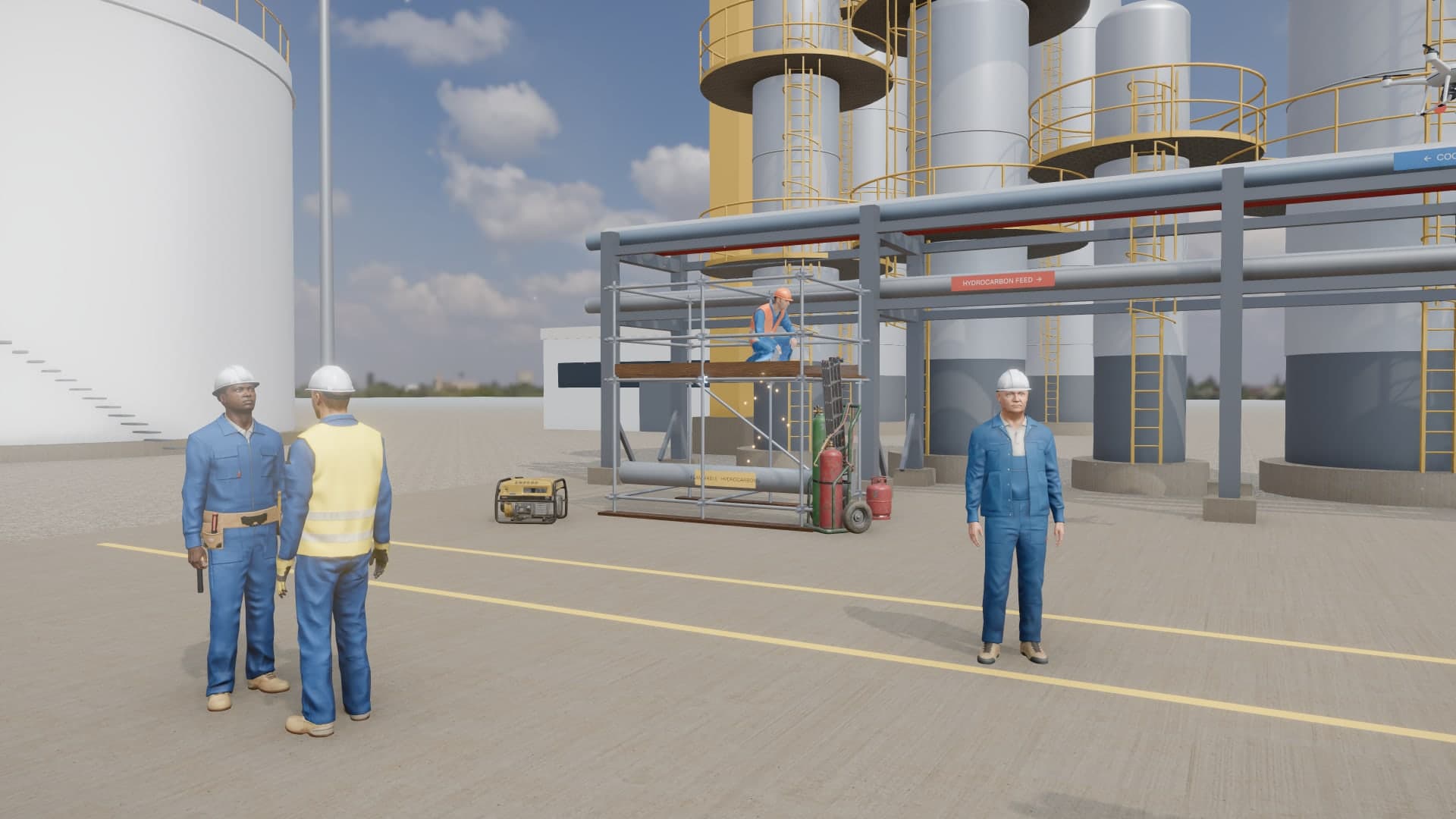
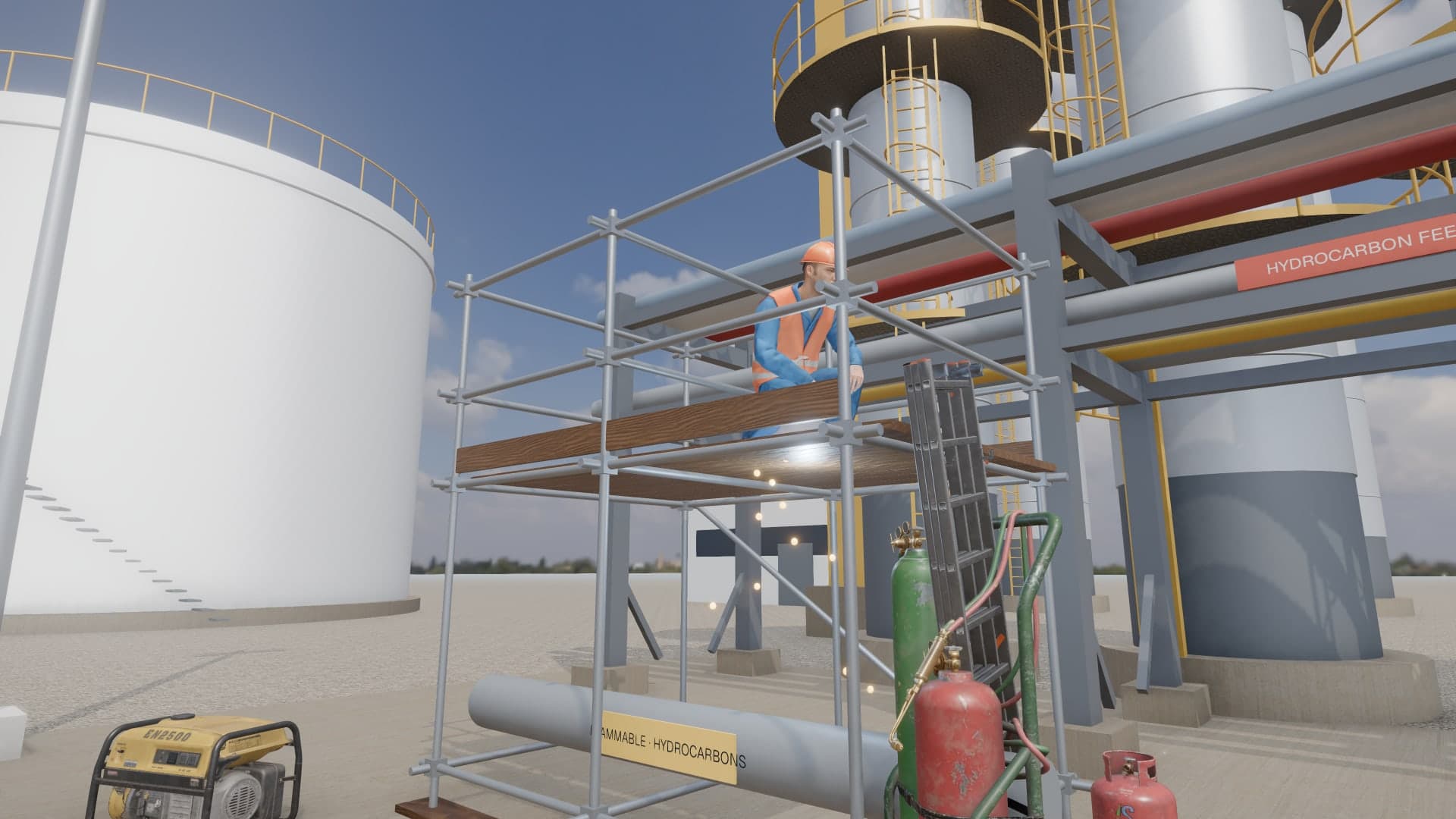
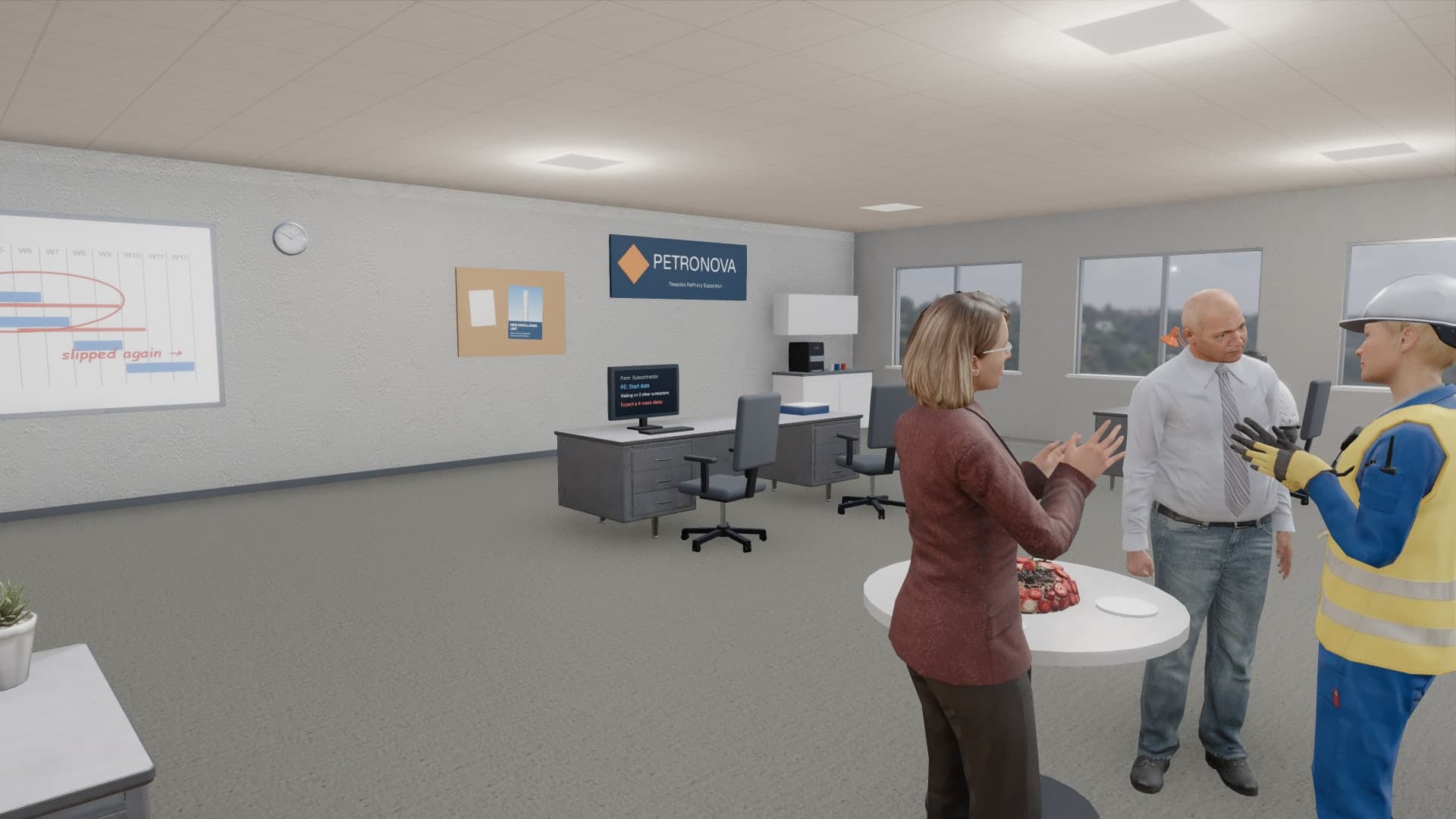
Nothing is labelled as a risk. Apprentices walk a refinery site, a project office and a boardroom, each seen through a different lens (PESTLE, SWOT and VUCA). They decide what is a real risk and what is noise.
- 02
Attention is limited. Apprentices can’t inspect everything, so they have to choose where to look.
- 03
Missed risks don’t disappear. The most serious ones return later as live issues to manage.
- 04
Every decision moves four meters: safety, cost, schedule, and compliance and reputation. Playing safe on everything drains the budget, and cutting corners ends in Crisis Mode.
- 05
Real pressure arrives mid-project: a sponsor who wants to cut safety spending, a board that wants to ignore the local community, and opportunities worth seizing.
- 06
One live risk register follows each risk, by its own reference number, from first sighting to the final report.
03 / Build:
The standard
- 01
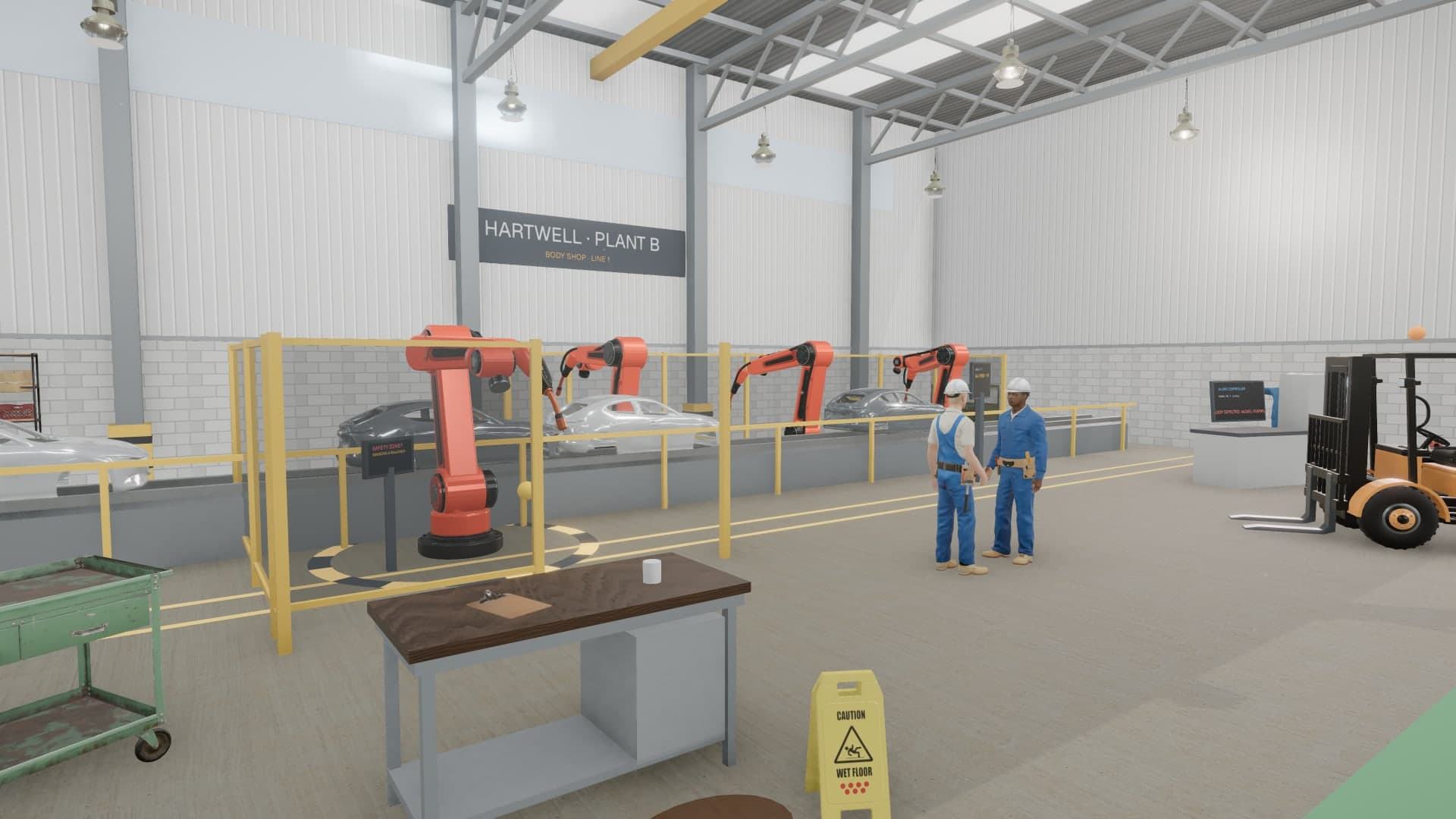
Two scenarios in two industries: PetroNova, a refinery expansion on Teesside, and Project Atlas, an AI-driven smart manufacturing upgrade at an assembly plant.
- 02
3D scenes, plus a full 2D version for keyboard and screen-reader users and slower computers.
- 03
Narrated throughout, with transcripts.
- 04
Progress saves as apprentices go, and difficulty levels change how demanding the later stages are.
- 05
Built gate by gate. Wherever the design went beyond Dr Onuoha’s framework, we documented the proposal and took it to him for sign-off before building it.
04 / Activate:
Into the curriculum
Facilitators run sessions by cohort: apprentices join with a code and play at their own pace. Each scenario fits a single 45 to 60 minute session, and it runs in the browser, so there is nothing to install.
05 / Measure:
Built into the product
Measurement isn’t a report written afterwards. It’s how the simulation ends.
- 01
Each apprentice’s risk register is compared against an expert panel’s answer: which risks they found, how they rated them, how they responded, and who they made accountable.
- 02
A weighted scoreboard covers five competencies: threat management, issue response, risk monitoring, opportunity exploitation and lessons learned.
- 03
Apprentices write reflections on what worked and what they missed.
- 04
Every apprentice leaves with a downloadable PDF report of their decisions and scores.
What this proves
Dr Onuoha came to us with a framework document. He left with a simulation that makes apprentices act, then shows exactly how they acted. That is what Game-Based Learning and Simulation is for: turning training content into decisions people make, with outcomes you can measure.